Best time to surf in Italy: a month-by-month calendar
What each month actually delivers — swell frequency, water temperature, crowds and which coast to bet on.
7 min readUpdated 3 August 2026
The short answer
October, November and March are the best months to surf in Italy. You get an active storm track, water that has not yet gone cold, and coastlines free of summer tourism.
Autumn: September to November
September is a transition. The sea is at its warmest, around 24°C, and the first serious lows begin crossing the western Mediterranean. Sessions are sporadic but the ones you get are warm and empty.
October is the month to book. Mistral events start stacking up, Sardinia turns on properly, and Liguria and Tuscany begin picking up libeccio swell. A 3/2 wetsuit is enough almost everywhere.
November delivers the highest ratio of surfable days to wasted days on the whole calendar. Water drops to around 18°C in the north. Crowds are gone.
Winter: December to February
The biggest swells of the year, and the coldest conditions. Sardinia can produce genuinely heavy, overhead days at Capo Mannu; the Ligurian points hold size. In the north you want a 4/3 with boots, and a hood on the worst days. Water hovers between 13 and 15°C, warmer in Sicily.
Winter also brings the most unusable days — long flat spells punctuated by storms that are simply too big and too windy. Flexibility matters more in winter than in any other season.
Spring: March to May
March is the last reliably good month. Swell frequency is still high, days are getting longer, and the water is at its coldest of the year — thermal lag means February and March water is colder than December water.
April fades. May is mostly flat, though a late libeccio can surprise the Tuscan coast.
Summer: June to August
Be honest about summer: it is not surf season. Expect knee-high days, hot offshore mornings and beaches crowded with umbrellas. It is a good time for longboarding, for teaching kids, and for scouting spots you will return to in October. Water reaches 26°C and you surf in boardshorts.
Water temperature and wetsuits
| Season | North (Liguria, Tuscany) | South (Sicily, Sardinia) | Suit |
|---|---|---|---|
| Autumn | 19–23°C | 21–25°C | 3/2 |
| Winter | 13–15°C | 15–17°C | 4/3 + boots |
| Spring | 13–17°C | 15–19°C | 4/3 then 3/2 |
| Summer | 24–27°C | 25–28°C | Shorty or nothing |
Planning around it
If you can only travel once, go the last week of October or the first two weeks of November, and base yourself in Sardinia or Tuscany. If you live in Italy, treat the whole autumn-to-spring window as one long season and let the forecast pick your weekends.
Spots covered in this guide
 Intermediate
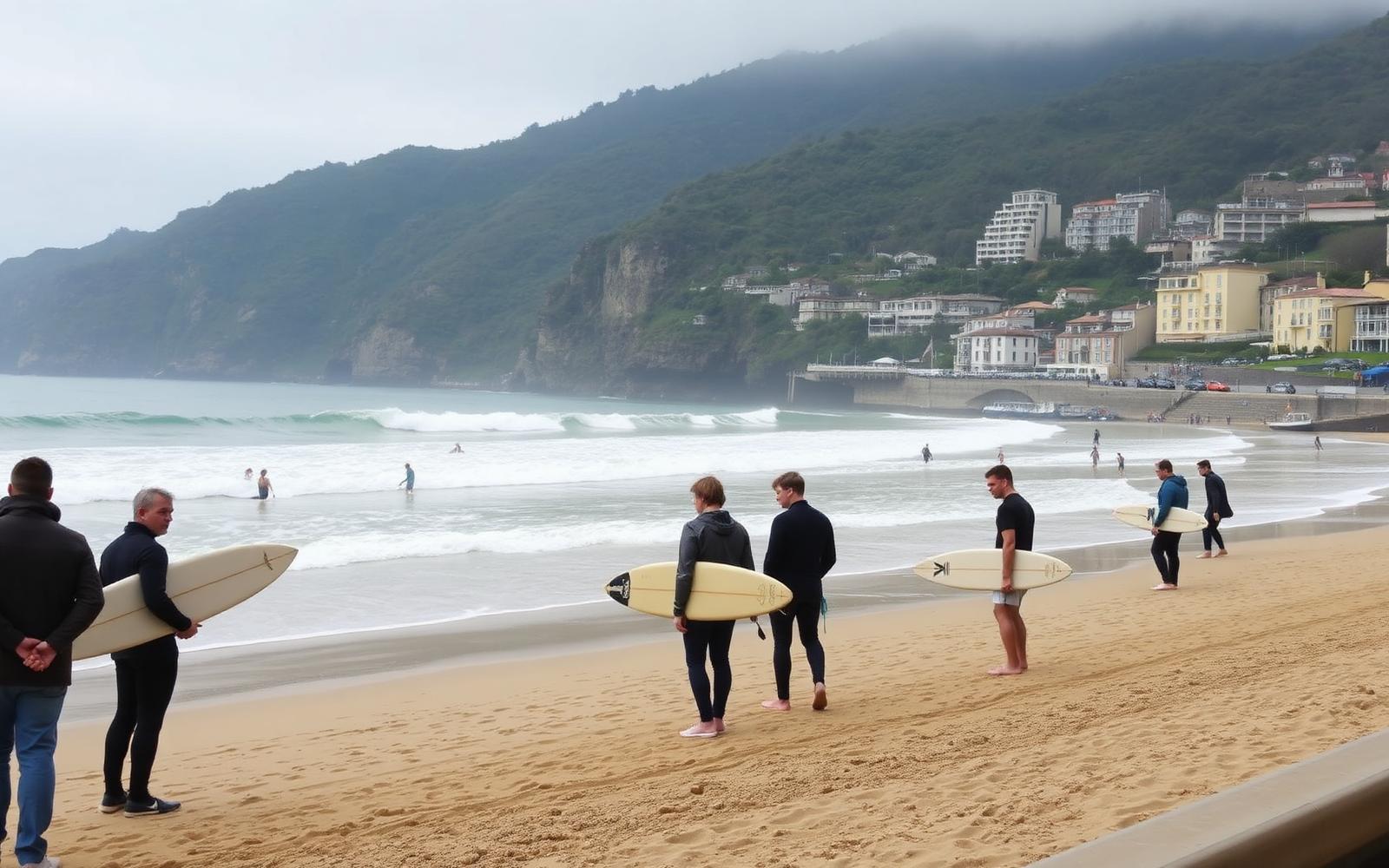
Levanto
Levanto is the best-known wave in Liguria and the traditional gateway to Italian surfing. The wide bay at the northern edge of the Cinque Terre catches south-west libeccio swell and organises it into rideable left and right peaks along the sand, with the cleanest banks usually found towards the northern end near the breakwater. On a mid-sized swell with north-east wind the wave is punchy but manageable — hollow enough to be fun, forgiving enough to progress on.
- Best months
- Oct – Apr
- Consistency
- 3/5
- Crowd
- Often crowded
 Beginner
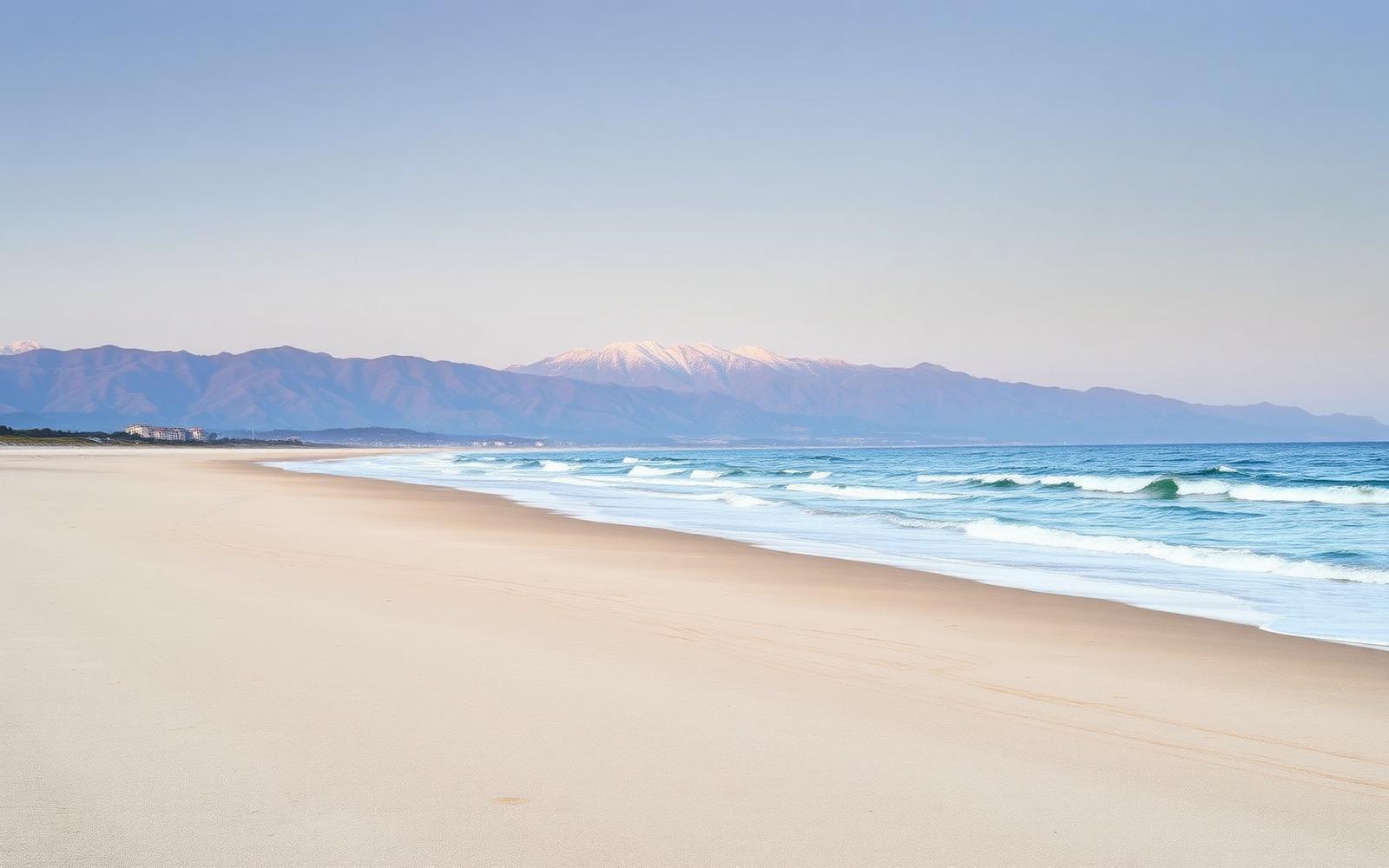
Viareggio
Viareggio is the busiest surf town in Tuscany and the centre of the region's surf culture, with shops, schools and a line-up that fills within an hour of any forecast. The beach runs for kilometres, so peaks shift with the sandbanks and there is almost always space to find your own. Waves are typically waist to chest high and user-friendly, occasionally doubling in size on a big winter libeccio.
- Best months
- Oct – Apr
- Consistency
- 3/5
- Crowd
- Often crowded
 Advanced
Capo Mannu
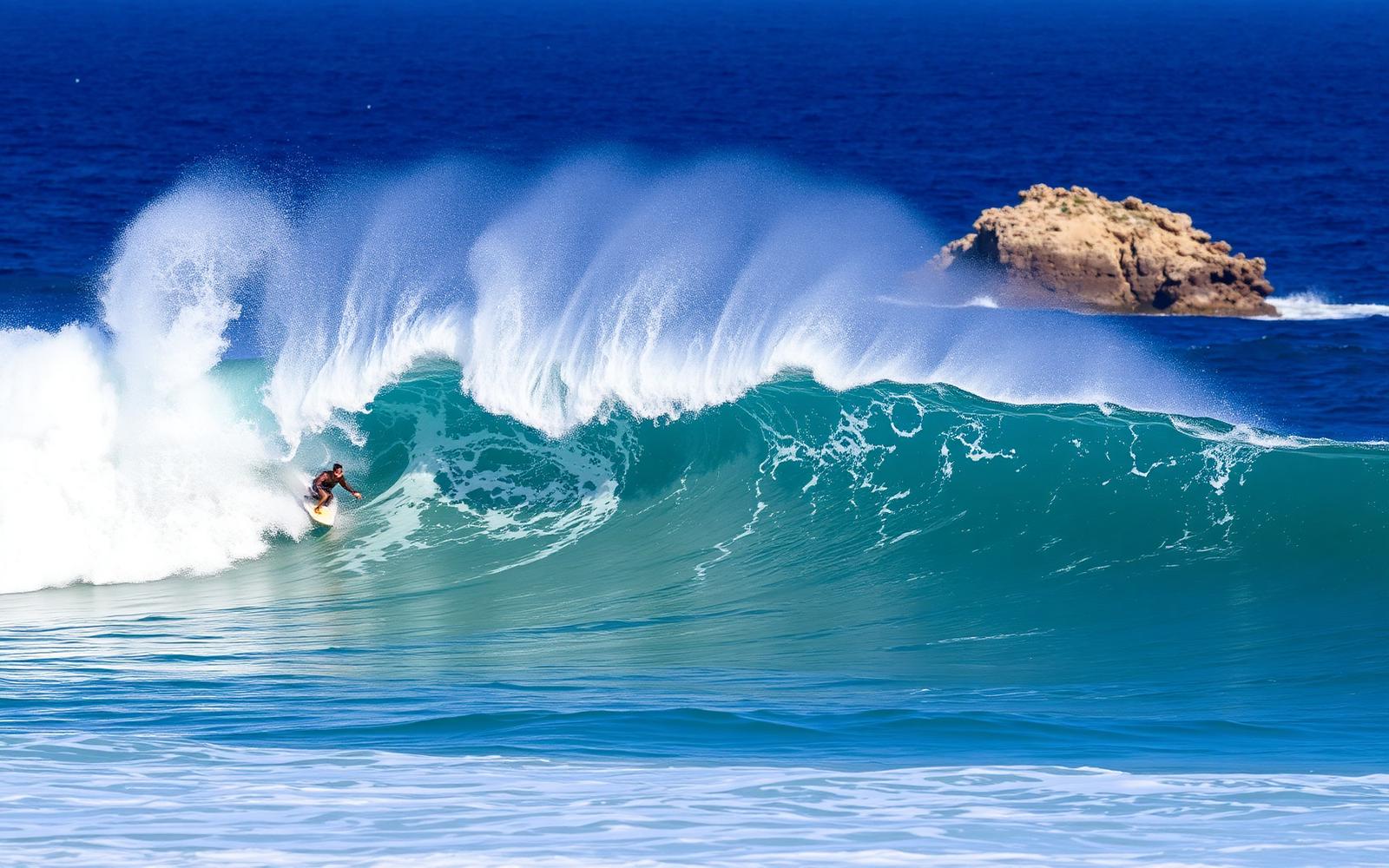
Capo Mannu is the most famous wave in the Mediterranean and the reason Sardinia appears on international surf maps. The exposed headland on the Sinis peninsula catches every north-west mistral swell and turns it into a long, hollow right-hander over reef, with an outside peak that can hold well overhead. It is powerful, shallow and genuinely world-class on its day — a wave for confident, experienced surfers only.
- Best months
- Oct – Apr
- Consistency
- 4/5
- Crowd
- Moderate crowd
IntermediatePortixeddu
Portixeddu is the most reliable beach break on Sardinia's south-west coast, a wide arc of sand between Buggerru and Capo Pecora that picks up almost every mistral swell. Multiple peaks spread the crowd — usually only a handful of surfers — and the wave has real punch without the danger of the reefs nearby. On the right day it produces fast, sand-bottom barrels that surprise first-time visitors.
- Best months
- Sep – Apr
- Consistency
- 4/5
- Crowd
- Rarely crowded
Keep reading
Surfing in Italy: the complete guide
Where the waves are, when they arrive and how to plan a trip around a Mediterranean swell window.
9 min read
Surfing in Italy for beginners
The most forgiving beaches, what to expect from your first Mediterranean sessions, and the mistakes worth skipping.
7 min read
Sardinia surf guide: Italy's wave engine
Why the west coast works, how to move around the island with the mistral, and which breaks reward the drive.
8 min read