Sardinia surf guide: Italy's wave engine
Why the west coast works, how to move around the island with the mistral, and which breaks reward the drive.
8 min readUpdated 3 August 2026
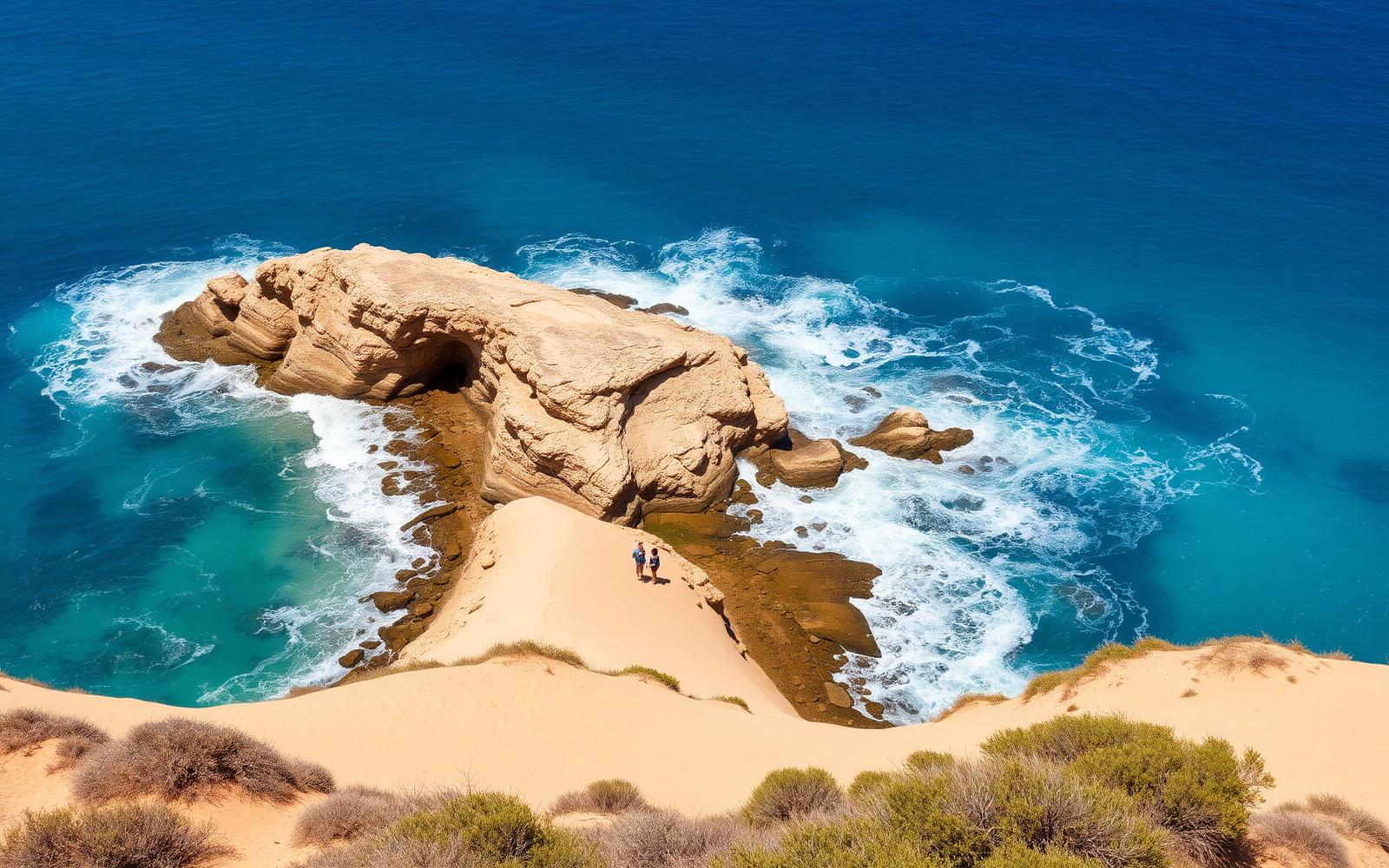
The best surf in Italy is here
Sardinia sits in open water with nothing between its west coast and the Gulf of Lion. When the mistral blows — and it blows often between October and April — swell arrives with more size, more period and more organisation than anywhere on the mainland.
The Sinis peninsula
Capo Mannu is the reference point. A right-hand reef setup on the northern tip of the Sinis peninsula that picks up almost any northwest swell and holds size well overhead. It is not a beginner wave: shallow, rocky and localised on the best days. But it is the closest thing Italy has to a world-class break, and everything else on this coast is measured against it.
The peninsula around it holds a dozen alternatives — beach breaks, sheltered coves and reefs of varying seriousness — which is what makes the Sinis the right base for a trip. When Capo Mannu is too big, something nearby is exactly right.
The southwest: Portixeddu and Buggerru
Two hours south, the old mining coast delivers a different experience. Portixeddu is a long beach break at the mouth of a valley, working on the same northwest swell with far fewer people in the water. Buggerru sits just north, tucked into a bay that cleans up when the wind swings onshore elsewhere.
This stretch is the answer when the Sinis is blown out or crowded.
Cagliari and the south
Poetto is the city beach — long, flat and easy, useful when a southeasterly is running and the west coast is flat. It is the beginner and longboard option, not the reason you flew here.
Reading the mistral
Watch for a low pressure over the Gulf of Lion or the Ligurian Sea with tight isobars over Corsica. Swell reaches Sardinia within 12 to 18 hours, peaks fast and drops within a day. The window is short and the reward for being in position is enormous — which is why surfers on Sardinia drive.
Getting there and moving around
Fly to Alghero, Olbia or Cagliari, or take an overnight ferry from Genoa, Livorno or Civitavecchia with your own car. Alghero is closest to the Sinis; Cagliari suits the southwest and the south.
Rent a car with a roof rack or bring soft racks. Distances are long, roads are quiet and empty, and the good spots are rarely near the hotels.
When to go
October to April, with November and March the sweet spots. Water is 14–16°C in midwinter — a 4/3 is enough, boots optional. Accommodation on the west coast is seasonal, so book ahead outside summer or stay in Oristano.
Etiquette
Sardinian line-ups are small and the same faces show up every swell. Say hello, do not drop in, and do not bring six friends to a reef that fits four. Respect earns you waves faster than paddling does.
Spots covered in this guide
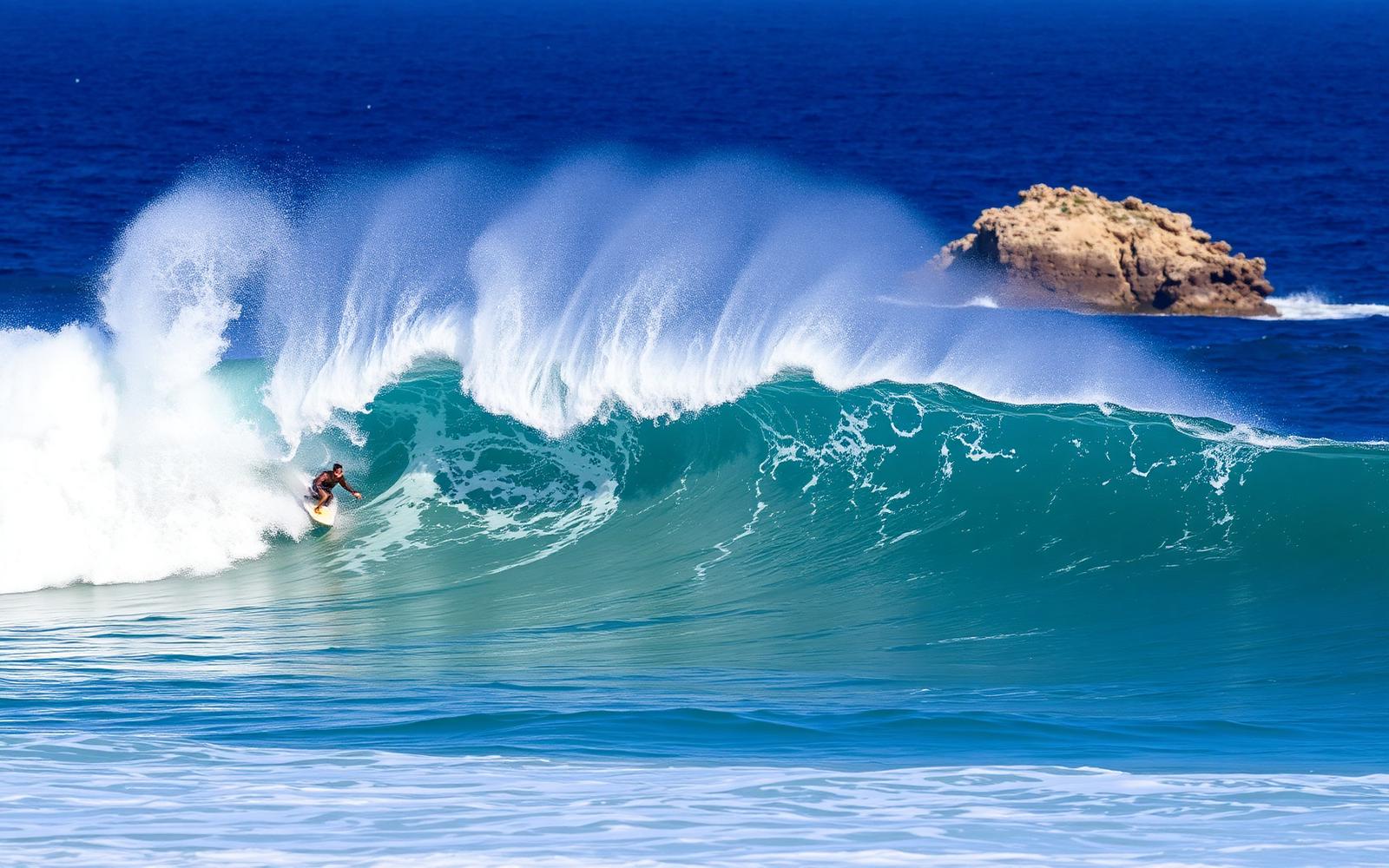 Advanced
Capo Mannu
Capo Mannu is the most famous wave in the Mediterranean and the reason Sardinia appears on international surf maps. The exposed headland on the Sinis peninsula catches every north-west mistral swell and turns it into a long, hollow right-hander over reef, with an outside peak that can hold well overhead. It is powerful, shallow and genuinely world-class on its day — a wave for confident, experienced surfers only.
- Best months
- Oct – Apr
- Consistency
- 4/5
- Crowd
- Moderate crowd
IntermediatePortixeddu
Portixeddu is the most reliable beach break on Sardinia's south-west coast, a wide arc of sand between Buggerru and Capo Pecora that picks up almost every mistral swell. Multiple peaks spread the crowd — usually only a handful of surfers — and the wave has real punch without the danger of the reefs nearby. On the right day it produces fast, sand-bottom barrels that surprise first-time visitors.
- Best months
- Sep – Apr
- Consistency
- 4/5
- Crowd
- Rarely crowded
AdvancedBuggerru
The old mining harbour of Buggerru shelters a quick, powerful left that breaks over a mix of rock and sand right beside the pier. It needs a solid mistral swell to start working, and when it does the wave is short, steep and demanding, with a fast section straight off the take-off. The industrial-heritage setting, with mine shafts cut into the cliffs above, makes it one of the most striking spots in Italy.
- Best months
- Oct – Mar
- Consistency
- 3/5
- Crowd
- Rarely crowded
BeginnerPoetto
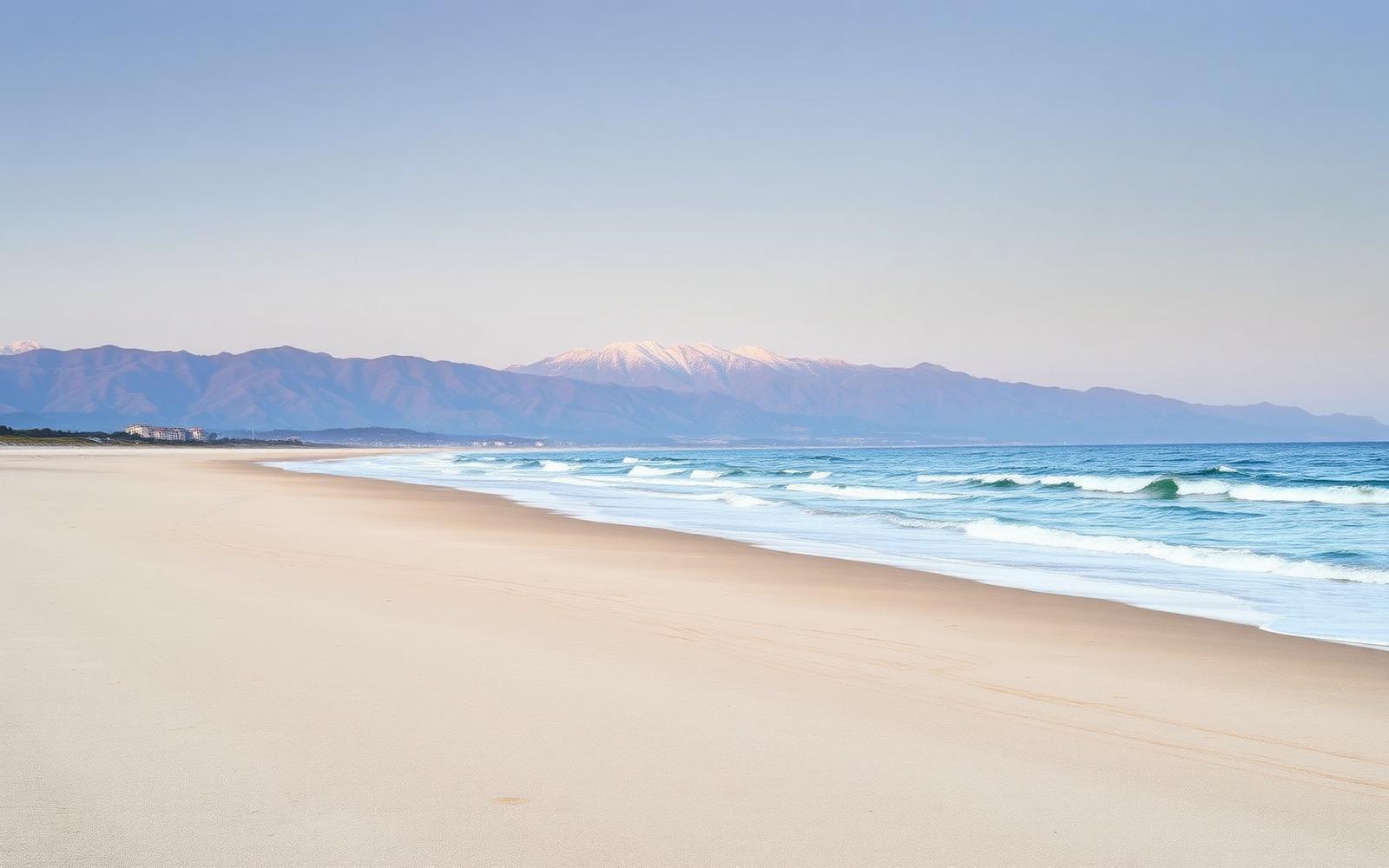
Poetto is Cagliari's eight-kilometre city beach and the place southern Sardinians learn to surf. It needs a south-easterly scirocco to break, and the resulting waves are small, choppy and short-period — but they are close, warm, safe and easy to reach on a bus from the old town. Treat it as a fun, low-stakes session rather than a destination wave.
- Best months
- Nov – Mar
- Consistency
- 2/5
- Crowd
- Moderate crowd
Keep reading
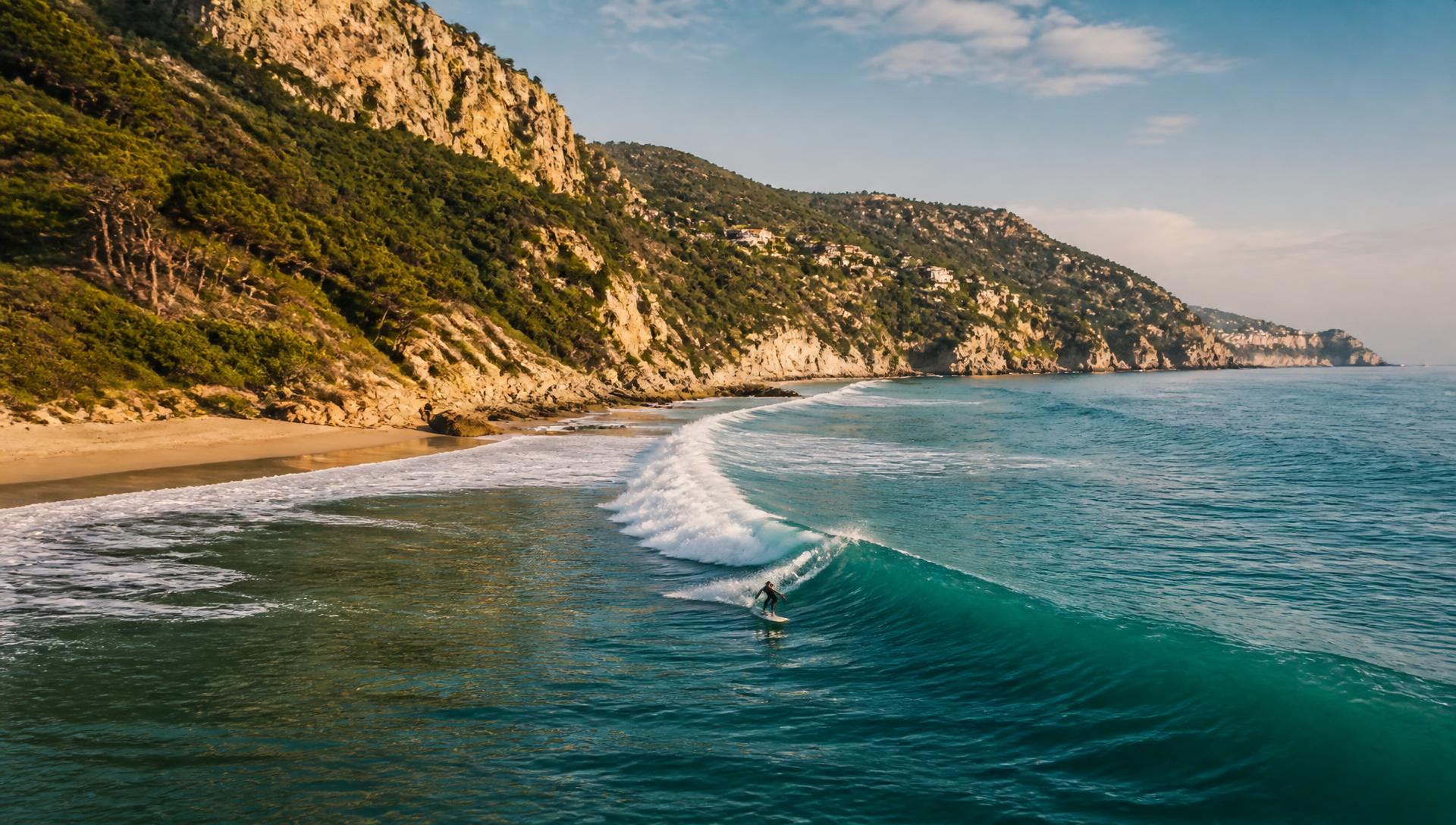
Surfing in Italy: the complete guide
Where the waves are, when they arrive and how to plan a trip around a Mediterranean swell window.
9 min read
Best time to surf in Italy: a month-by-month calendar
What each month actually delivers — swell frequency, water temperature, crowds and which coast to bet on.
7 min read
Surfing in Italy for beginners
The most forgiving beaches, what to expect from your first Mediterranean sessions, and the mistakes worth skipping.
7 min read